Australian Stuffed Animals Worth Collecting, Gifting and Keeping

There is something genuinely special about holding a stuffed animal that represents a creature most people will never encounter in the wild. Australian stuffed animals sit in a category all their own, because the animals they represent are unlike anything else on the planet. A koala, a platypus, a quokka, these are not animals you can find just anywhere, and that makes a plush version of them feel meaningful in a way that a generic teddy bear simply does not.
Whether you are shopping for a gift, starting a collection, or just curious about what makes these toys worth your attention, this guide is here to help. We will walk you through the most beloved Australian animals available in plush form, explain what separates a quality toy from a forgettable one, and even touch on why some purchases carry a conservation impact you might not expect.
You do not need to be an expert collector to enjoy this. By the end, you will know exactly what to look for and why Australian stuffed animals have earned such a devoted following around the world.
Why Australian Stuffed Animals Hold a Special Place
Australia's wildlife is unlike anything else on the planet. Koalas, kangaroos, wombats, platypuses, and echidnas exist nowhere else in the wild, and that biological uniqueness translates directly into plush toys that carry genuine personality and story.
The global stuffed and plush toy market backs this up with numbers. Valued at USD 12.1 billion in 2026 and projected to reach USD 24.6 billion by 2036, the category is growing fast, and the Asia-Pacific region is among the fastest-moving segments driving that expansion.
What's also shifting is why people buy. Buyers today, whether shopping for children, building a collection, or hunting for a meaningful gift, increasingly want authenticity. A plush that reflects real regional identity carries more weight than a generic bear or bunny. Heritage matters, particularly in the premium gifting space.
Australian animals add another layer: conservation relevance. A koala plush isn't just soft and cute; it represents a vulnerable species with a real story behind it. That emotional depth is something no generic stuffed animal can replicate.
Bocchetta Plush Toys has been designing in Australia since 1948, well before "premium plush" became a market category. You can explore their kangaroo plush toy collection to see what regionally accurate, lifelike design actually looks like in practice.
Koala Plush Toys: Iconic, Threatened, and Deeply Loved
Few Australian animals carry the emotional weight of the koala. In Queensland, New South Wales, and the ACT, koalas are now listed as endangered under federal environmental law, with habitat loss and the 2019–2020 bushfires accelerating population decline. That real-world vulnerability gives a koala plush genuine storytelling weight beyond any other souvenir.
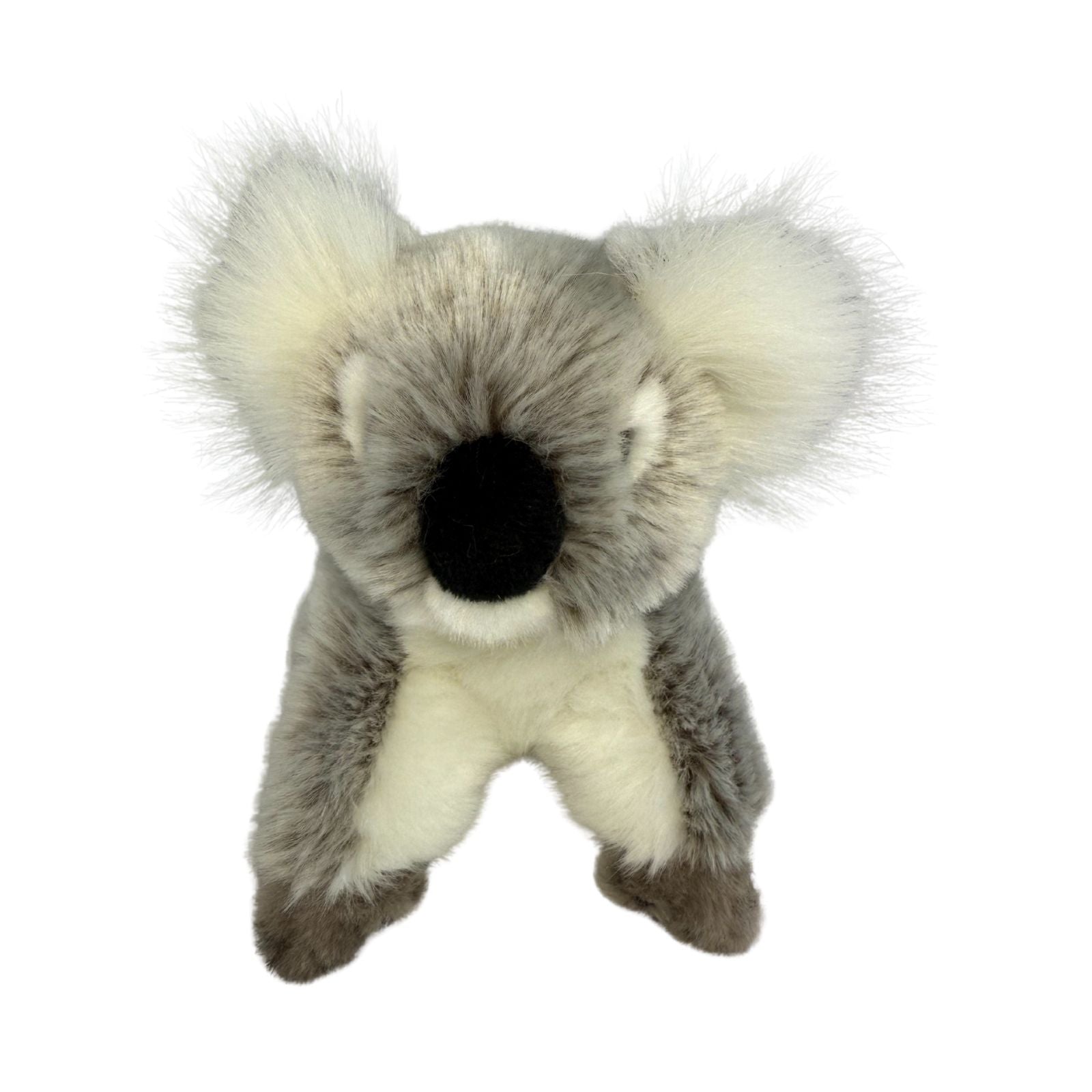
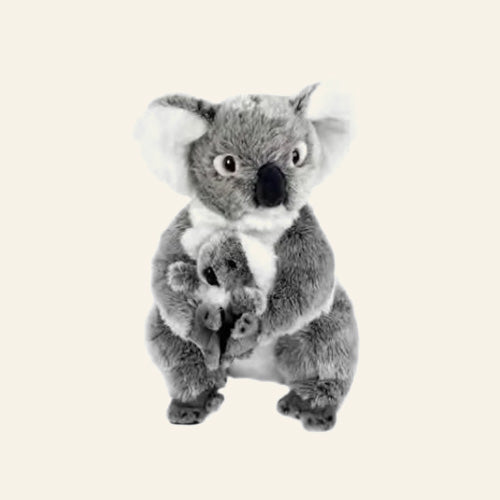
Visually, the koala is immediately recognisable: grey-brown fur, a stocky build, and those distinctive rounded ears. A quality lifelike koala plush captures all three, sitting clearly apart from generic teddy bears on any shelf.
Bocchetta's koala range spans multiple sizes and poses, including joey-in-pouch designs for young children and seated adult koalas suited to wildlife enthusiasts and collectors. There's a genuine option for almost every buyer.
Koalas also rank consistently among the most-gifted Australian wildlife souvenirs for both international visitors and online shoppers looking for something authentically local.
When you're choosing one, prioritise accurate facial sculpting and dense, tactile fur over a cartoonish interpretation. The closer the plush reflects the real animal, the more it resonates, whether it's being gifted, displayed, or cuddled.

Kangaroo Stuffed Animals: A Symbol of Australia in Plush Form
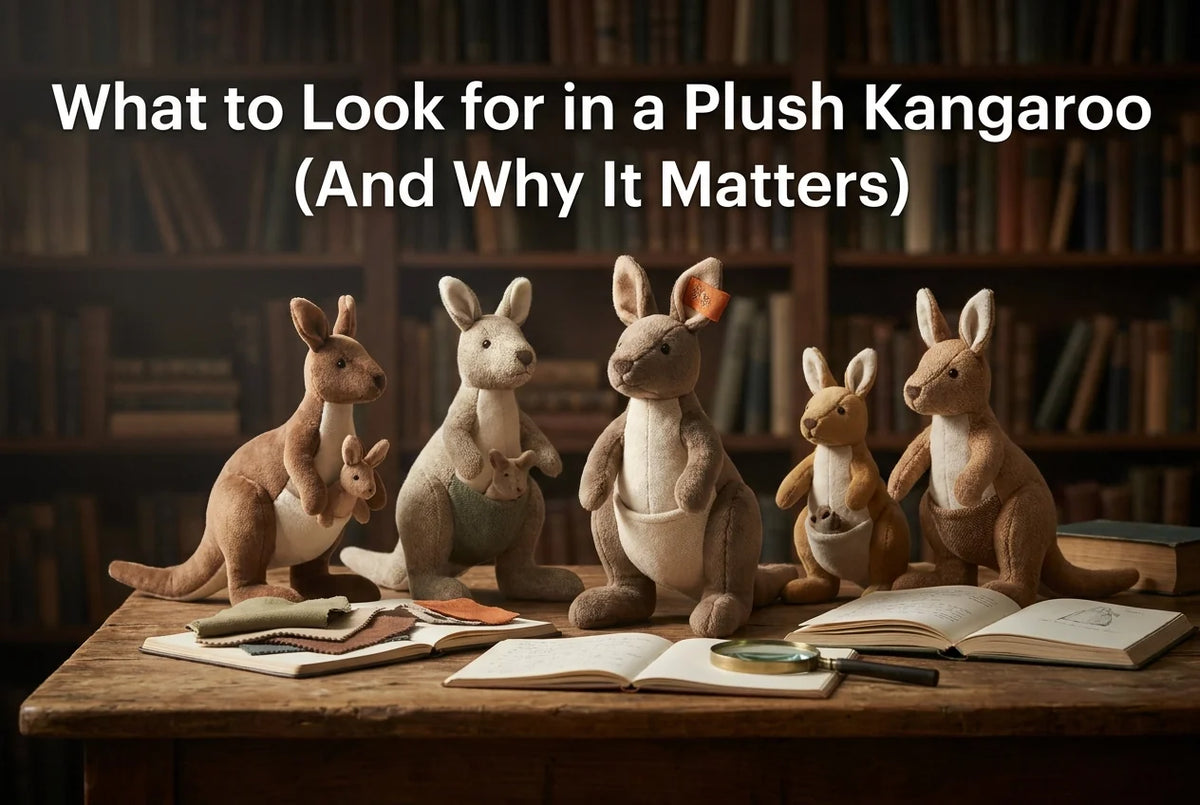
If koalas are Australia's most beloved animal, kangaroos are arguably its most recognised. The kangaroo appears on the Commonwealth Coat of Arms alongside the emu, making it one of the most enduring symbols of Australian national identity globally. That recognition translates directly into plush toy appeal, particularly for gifts and souvenirs.
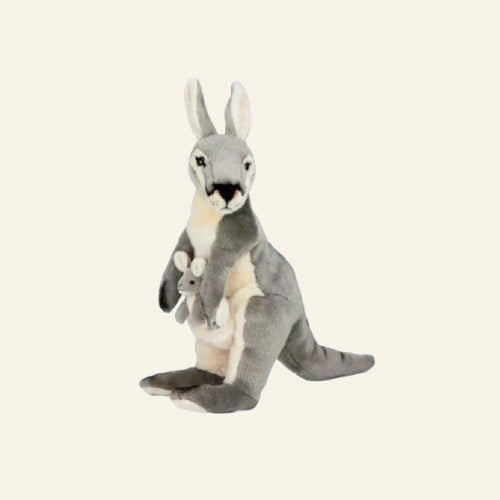
A well-made kangaroo stuffed animal is immediately distinctive. The long hind legs, upright posture, and tapered snout are features no other animal shares, and quality plush designs capture all three. That silhouette alone makes a kangaroo plush stand out in any collection.
Joey-and-mother designs take things a step further. There is something genuinely charming about a tiny joey peeking from a pouch, and that detail makes these designs especially popular for young children and family gift occasions.
Bocchetta's kangaroo range goes further still, distinguishing eastern grey kangaroos from red kangaroos in colouring and body proportion. That species-level accuracy reflects the kind of attention to detail you get from a brand with decades of Australian wildlife plush design experience.
For collectors, look for realistic fur textures and weighted limbs. These tactile details signal premium quality and reflect the broader shift toward value-driven plush buying.
Wombat Plush Toys: The Underrated Australian Favorite
Wombats are internationally underrated yet deeply loved by Australians themselves. A wombat plush makes a genuinely distinctive gift precisely because it's unexpected.
The conservation story behind wombats is striking. The northern hairy-nosed wombat is one of the world's rarest large mammals, with only around 400 individuals remaining. That context transforms a wombat stuffed animal into a natural conversation starter about Australian wildlife protection.
Design matters here more than people realise. A well-made wombat plush emphasises the animal's barrel-shaped body, short sturdy legs, and wide flat nose. Without those features, it reads as a generic brown bear, which misses the point entirely.
Bocchetta's wombat range captures the animal's low-slung, compact build accurately, with tactile fur that communicates the real animal's rough, earthy quality rather than a soft, idealised coat.
Wombat plush toys attract a particular kind of buyer: wildlife enthusiasts and adult collectors who want something beyond the predictable koala or kangaroo. If you're building an Australian fauna collection or shopping for someone who genuinely loves animals rather than just souvenirs, a quality wombat plush is one of the most meaningful choices on the shelf.
Platypus and Echidna: Australia's Most Unusual Animals in Plush
If wombats are the underrated pick, platypuses and echidnas are the genuinely unexpected ones.
As the world's only egg-laying mammals, platypuses and echidnas belong to a group called monotremes, a distinction so unusual that early European scientists assumed the platypus was a hoax. That biological novelty makes both animals compelling as gift and collector pieces in a way few other species can match.
The platypus is a particular design challenge. Capturing the duck-bill, beaver-tail, and webbed feet in a single plush requires real anatomical commitment, which is exactly why collectors place a premium on versions that get it right rather than settle for a vague approximation.
Echidnas present a different puzzle: representing the spiny exterior with materials that look authentic but remain safe and soft to handle. A well-executed echidna stuffed animal delivers a tactile experience genuinely unlike any other plush toy on the shelf.
Bocchetta's platypus and echidna designs prioritise lifelike accuracy, giving wildlife educators and serious collectors something with real representational integrity behind it.
For international buyers wanting an authentically Australian gift that moves beyond the expected koala or kangaroo, both animals are a smart and memorable choice.
Tasmanian Devils and Quokkas: Collectors' Favorites Worth Knowing
Beyond platypus and echidna, two more marsupials deserve a spot on any serious collector's shortlist.
The Tasmanian devil is now an IUCN-listed endangered species, with Devil Facial Tumour Disease having wiped out roughly 80% of wild populations since 1996. That conservation weight makes a devil plush more than a toy; it's a conversation starter about one of Australia's most urgent wildlife crises. A well-made version captures the stocky build, dark fur, and white chest marking that make the real animal instantly recognisable to wildlife-aware buyers. Bocchetta's Tasmanian devil plush collection reflects exactly that attention to species accuracy.
Quokkas bring a completely different energy. Native to Rottnest Island off the coast of Western Australia, they are one of Australia's most distinctively charming species, recognisable by their compact, rounded bodies and the upturned set of their mouths that gives them an apparently cheerful expression. Their uniquely Australian character has made them a genuine social media phenomenon, with quokka selfies attracting celebrity participation and enough hashtag traction that Instagram applied content warnings to #quokkaselfie. That visibility has kept quokka plush toys a popular and characterful choice for collectors and gift-buyers alike.
For collectors building a full Australian wildlife display, pairing these two species alongside a koala or kangaroo adds genuine depth. You move from "Australian gift" to a collection that tells a broader story about this country's remarkable and often underappreciated fauna diversity, which is precisely what Bocchetta's marsupial range is designed to support.
Australian Bird Plush Toys: Kookaburras, Emus, and Beyond
Australia's birdlife extends the wildlife plush story well beyond marsupials. With over 800 native bird species, the continent produces some of the most visually striking candidates for plush toy design anywhere in the world. Kookaburras, emus, cockatoos, and galahs all bring bold shapes and distinctive colouring that translate beautifully into soft toy form.
The emu holds a particularly strong position here. As Australia's largest native bird and one of the two animals on the national coat of arms, it carries instant recognition. Bocchetta's emu plush toys are a popular pick for Australian-themed gift sets, especially for buyers wanting something beyond the standard koala-and-kangaroo pairing.
Kookaburra plush toys draw buyers with a personal connection to the Australian bush, whether childhood memories or time spent in rural areas. That emotional anchor makes them a surprisingly strong gift choice.
Bird plush toys are genuinely harder to manufacture well. Beak shape, feather texture, and scaled foot structure all require careful execution to look convincing rather than generic. Quality matters more in this category than almost any other.
For non-traditional buyers, Australian bird plush toys work particularly well in wildlife educator kits, classroom nature collections, and nature-themed nurseries, reaching audiences well outside the standard toy aisle.
What Separates a Great Australian Plush from a Generic One
Not all plush toys are created equal, and that's especially obvious once you've seen a genuinely lifelike Australian animal next to a generic approximation.
Species accuracy is the single most important quality marker. A great koala plush has the right grey-brown colouring, rounded ears, and compact proportions. A poor one looks like a generic bear with a nose drawn on. Colours, facial features, and fur texture should reflect the real animal, not a softened cartoon version.
Material quality follows closely. Premium synthetic plush fabrics feel noticeably different in your hands: softer, denser, and far more durable over years of handling. That matters whether the toy belongs to a five-year-old or sits in an adult collector's display.
Safety certifications are non-negotiable for children's toys. In Australia, look for compliance with relevant mandatory safety standards for children's toys, and confirm that any plush intended for young children meets applicable age-group requirements.
Heritage matters too. A manufacturer with decades of design experience simply notices details that trend-driven producers skip. Creating joy with lifelike plush animals has been Bocchetta's focus since 1948, and that longevity shows in the craft, the regional authenticity, and the consistent attention to what Australian wildlife actually looks like.
Who Are Australian Stuffed Animals Really For
So who actually buys Australian stuffed animals? The answer is broader than you might expect.
Children aged 3 and up are still the heart of the market, drawn to soft textures and recognisable animal shapes like koalas and kangaroos. But the audience has grown well beyond the kids' bedroom.
The "kidult" collector segment (adults 18 and over) is one of the fastest-growing groups in the global plush toy market, with adults now representing 28% of total toy sales. These buyers want premium, lifelike designs they can display and build collections around, not just something to cuddle.
International tourists and online gift-buyers are another major group. They want a souvenir that feels genuinely Australian, something with craft and character that airport shop alternatives rarely deliver.
Wildlife educators, zoos, and conservation organisations use lifelike plush animals as hands-on learning tools, particularly when introducing young audiences to native fauna for the first time. A tactile wombat or platypus makes abstract wildlife education feel immediate.
Content creators and influencers in wildlife, travel, and lifestyle niches have also emerged as a real audience, using premium Australian plush in visual storytelling and brand partnerships.
In short, these toys have quietly outgrown the toy aisle.
The Conservation Connection: Why Your Plush Choice Can Mean More
Beyond who's buying these plush toys, there's a deeper question worth considering: what do your purchases actually stand for?
As covered earlier, koalas, Tasmanian devils, and northern hairy-nosed wombats all carry endangered or critically endangered status, the same animals that sit on toy shelves. These aren't abstract conservation statistics; they're the same animals sitting on toy shelves.
When a brand educates buyers about that real-world context, a plush toy becomes something more than a gift. Research from the University of South Australia found that species recognition directly increases people's willingness to support conservation. Simply knowing an animal's story changes behaviour.
Brands with genuine Australian design heritage are better placed to tell these stories credibly. Decades of accurately representing native fauna builds the kind of trust that a trend-chasing manufacturer can't replicate quickly.
This matters especially to adult buyers and gift-givers who want their spending to carry meaning, a preference that's grown steadily alongside broader sustainability awareness. Bocchetta's focus on lifelike Australian fauna since 1948 positions it naturally within that expectation, connecting product quality to a quiet but genuine respect for the animals it depicts.

Finding the Right Australian Stuffed Animal Starts with Knowing What You Value
So, what's the right pick? It comes down to who you're buying for.
A child benefits most from safety-certified softness and a species they can recognise and love, like a koala or kangaroo. A collector is after something different: lifelike accuracy, realistic proportions, and a piece genuinely worth displaying.
Either way, Australian wildlife plush toys carry emotional and conservation weight that generic stuffed animals simply don't. That species story, explored throughout this guide, is part of what you're buying.
If you're not sure where to start, Bocchetta's full Australian wildlife range is a solid first stop. Designing in Australia since 1948, the brand brings decades of craft to every animal it recreates, whether you're a first-time buyer or building a serious collection.
Before you buy, take a moment to look up the species. Knowing that a northern hairy-nosed wombat is one of the world's rarest large mammals makes that plush mean something more.
Browse by animal type or by occasion and see what feels right.
Conclusion
Australian stuffed animals offer something most plush toys simply don't: a genuine connection to wildlife that is iconic, unusual, and in many cases under real conservation pressure. The species matter. The craftsmanship matters. And increasingly, so does the brand behind the product.
Whether you're choosing for a child who needs something soft and recognisable, a collector building a meaningful display, or a gift-recipient who deserves more than a generic toy, Australia's wildlife range delivers on every level.
The best picks combine lifelike accuracy, quality materials, and a respect for the real animals they represent. Bocchetta's Australian range, shaped by over seven decades of design experience, checks each of those boxes.
Start with the animal that means something to you. Look it up, learn its story, then find the plush that does it justice.